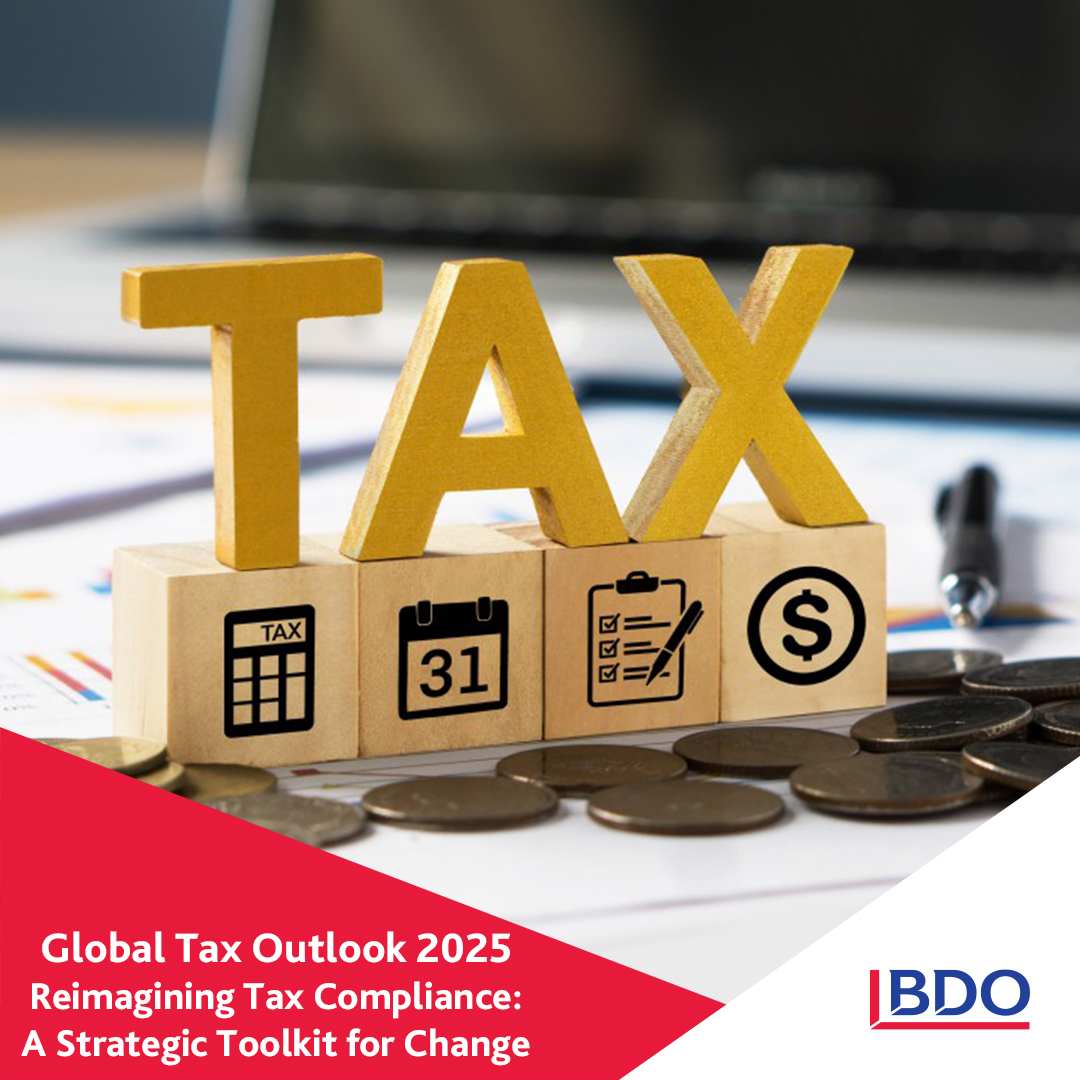
Technical Executive Summary: Global Tax Outlook 2025
Technical Executive Summary: Global Tax Outlook 2025
Source: BDO Global – Global Tax Outlook 2025: Reimagining Tax Compliance – A Strategic Toolkit for Change.
By: BDO Jordanhttps://www.bdo.global/en-gb/services/tax/global-tax-outlook/global-tax-outlook-2025-report
Overview
The Global Tax Outlook 2025 explores how tax compliance is evolving in response to a more complex and fast-moving regulatory environment. As tax authorities increase their use of technology and enforcement, organizations are under growing pressure to deliver accurate, timely and transparent reporting. The report highlights the shift in mindset among tax leaders, who are now positioning tax compliance as a strategic function that supports risk management, business growth and long-term value.
The Biggest Tax Compliance Challenges
- Keeping up with regulations
- Transfer pricing documentation and audits
- Real-time digital reporting
- Compliance deadlines and payments
- Increased enforcement
- Tech and data integration
- Country-by-country reporting
The Biggest Tax Compliance Operational Challenges
-
Missing filing deadlines
-
Inaccurate returns
-
Slow response to tax authorities
-
High Costs
-
Disconnect with business strategy
Key Insights and Technical Highlights
1. Increasing Regulatory Complexity and Enforcement
-
Tax authorities are becoming more proactive and technologically advanced in monitoring compliance.
-
Businesses face greater pressure to keep pace with changing regulations, transfer pricing requirements, real-time digital reporting and increased enforcement activities.
-
As a result, organizations are allocating more time and resources to managing regulatory queries and ensuring accuracy in filings.
2. Rising Cost and Operational Pressure
-
Most organizations expect compliance costs to increase due to additional reporting, technology investments and the need for specialized expertise.
-
Tax leaders are focused on improving efficiency while maintaining high levels of accuracy and control.
3. Alignment of Tax with Business Strategy
-
The report highlights the importance of embedding tax early in business decisions.
-
Whether during acquisitions, expansion or transformation initiatives, integrating tax into planning helps organizations manage risks, capture opportunities and protect value.
4. Flexible and Hybrid Outsourcing Models
-
Hybrid & co-sourcing models are becoming the preferred approach.
-
These allow organizations to retain core expertise while leveraging external capabilities to improve quality and agility.
-
Strong collaboration and clear accountability are essential for successful partnerships.
5. Data Quality and Technology as Critical Enablers
-
Data quality and systems integration remain central to effective compliance.
-
Organizations are investing in automation, standardization and real-time reporting capabilities to improve accuracy and enable more responsive compliance processes.
6. Tax Risk Management and Governance
-
Most organizations have implemented tax risk frameworks; however, the maturity and effectiveness of these frameworks vary.
-
Comprehensive governance structures, defined responsibilities, monitoring processes and escalation mechanisms are essential to managing risk proactively and ensuring compliance integrity.
7. The Growing Role of AI and Automation
-
AI is already supporting areas such as data extraction, knowledge management and error detection.
-
While its current impact is largely operational, organizations expect it to play a greater role in improving accuracy and enabling more strategic decision-making over time.
8. Building Trusted Relationships with Tax Authorities
-
A proactive and transparent approach to managing regulatory relationships is increasingly important.
-
Organizations that engage early and collaborate with authorities are better positioned to manage audits, reduce disputes and maintain trust.
The Global Tax Outlook 2025 concludes that the future of tax compliance will depend on agility, collaboration and smart investment in people and technology. By aligning tax with business strategy, strengthening governance and building trusted partnerships, organizations can manage risk effectively while supporting sustainable growth in a rapidly changing global environment.